
The Ultimate Guide to Cupping WuYi Yancha: Sensory Evaluation Made Simple

Updated: Apr 10, 2025
Hey friends! Recently I’ve noticed an uptick in interest in yancha (Wuyi Rock Oolongs) and wanted to do an expanded guide for you, since my last guide was so popular. This will be the official part two to that guide. One of the things people have been most interested in has been professionally cupping and tasting yancha, as well as the standards set forth by the Chinese Government (GuoBiao), something rarely talked about in the West. As a certified rock oolong specialist and as a tea educator, I wanted to make sure you all knew the proper way to cup a rock oolong as well as the GuoBiao standards for yancha. This will be part 1 of 2, with the second part being an actual GuoBiao-style analysis of a yancha done by yours truly. This post will cover Rivers and Lakes’ Shi Ru, as will the GuoBiao post, for accuracy. This post will break down the process for cupping yancha into 9 easy-to-follow steps, hopefully upping your tea prowess. So, without further ado, let’s get into this.
What is GuoBiao?
GuoBiao, or GB, is short for the National Standards of the People’s Republic of China. The GuoBiao is akin to the United States’ Food and Drug Administration (FDA) and the United States Department of Agriculture (USDA), in that it sets mandatory product standardization specifications. This is the key difference- the GB standards are grouped into mandatory (GB) and enforced and recommended standards (GB/T), whereas in the US, a lot of the standards are voluntary (i.e., ANSI standards) unless they are incorporated into law. This means that the GB standards are, in essence, the set of regulations that the Chinese industry follows for everything from leaf material to packaging. The standards I’ll be using for yancha are GB/T 18745-2006/XG1-2018. For yancha, if the packaging has GB/T 18745 on it, you are guaranteed to have a yancha from WuyiShan. You might also see a circular logo with a GI in it. That logo is the geographic proof of origin. This number, combined with that seal, is the Geographic Indication of the People's Republic of China, or basically, the proof that that tea you have came from WuyiShan and isn't counterfeit.

Why Cup Yancha?
One of the most common questions I’ve received is why you should cup yancha- what advantages does it offer, why is it used in evaluations, etc. In short, cupping yancha allows you more control and focus on the tea. Using a tasting bowl and spoon allow you to focus intensely on the tea’s aroma, flavor, and texture without distractions, as the bowls are porcelain and neutral materials, meaning there won’t be any effects from say a yixing pot with the tea. The wider, shallow bowls cool the tea quickly, which in turn makes it easier to detect the nuanced aromas and flavors.
Cupping also is standardized and consistent, allowing for a consistent way to evaluate different batches of the same tea at a time, which is why it’s used at the professional level. Using the spoon ensures that the same amount of tea is drunk each time, minimizing variations in the tea from your personal brewing style. Consistency is key in professional settings when quality control and comparability are key to a balanced, fair analysis of the source material. Aside from this, you also get to assess the leaf’s appearance, size, and condition more clearly after brewing than if you brewed with a gaiwan or teapot. You get to see the clearer color of the tea and measure for turbidity (opaqueness/clarity of the tea), which is another key point for appearance.

Cupping Yancha: Necessary Tools and Equipment
In order to professionally cup a Wuyi rock oolong, you will need the following:
Tasting Bowl: A shallow, wide cup or bowl, ideally 150-200ml with a broad surface area and high walls to allow aromas to better reach your nose. If you don’t have one, you can also use any ceramic cereal or soup bowl you have, but you want to make sure that the volume is relatively smaller- the 150-200ml limit is perfect for cupping. Too large of a bowl and the aromas get lost easier.
Tasting Spoon: A cupping spoon with a flat bowl to scoop and taste the tea, typically almost always ceramic; you can use those porcelain soup spoons you see served with ramen or other soups in Asia- you just want one with a flat bottomed bowl for scooping as it makes it easier to both cup the tea and smell the spoon afterwards for the unique aromas.
Gaiwan or brewing vessel: You can brew the tea directly in the tasting bowl, but I prefer to brew it in a 100-200ml gaiwan or brewing cup, like this. Personally, I use my 100ml gaiwan that I got from WuyiStar.
Tea Cup: A small tea cup, generally 30-60ml capacity. This tea cup is what you decant the tea into, with the small size allowing you to take more controlled sips of the tea, meaning you can evaluate the aroma, body, and flavor more directly.
Yancha of your choice: You want between 3 and 5g of leaf for every 100ml in your gaiwan. This ratio allows you to extract the tea properly, giving enough space for the leaves to expand fully while also ensuring a balanced flavor. The most commonly used professional ratio is 3g of leaf for your gaiwan.
A timer of sorts: This is optional as you can just use your phone, but I have a physical timer for my steepings.
A professional tasting bowl A professional tasting bowl A professional tasting spoon My tasting gaiwan Small gongfu tea cup for drinking The optional timer
For our example for this guide, we will be using the Shi Ru (stone milk) yancha from Rivers and Lakes Tea. Shi Ru is one of my favorite types of yancha and one that I’m very familiar with, so I thought it a great candidate for this analysis.
Step 1: Preparing for Cupping
To cup your yancha, you need to prepare. The steps are as follows:
Measure your tea. You want around 3-5g of leaves. The leaves should be whole and not broken, as broken leaves affect the taste of the brewed tea.
Water temperature: Use water heated to 90-95C (194-203F), or just under boiling. You can use boiling, and professionally when pushing yancha, boiling water is a great option to make sure you push the leaves to their limits; for a more nuanced, beginner-friendly approach, I would suggest sticking to just below boiling water to avoid over extracting the tea and getting a bitter cup.
Get your tea utensils ready: Get your tasting bowl, gaiwan, and kettle ready. You want to warm the bowl and gaiwan with hot water first to maintain a consistent brewing temperature throughout analysis.
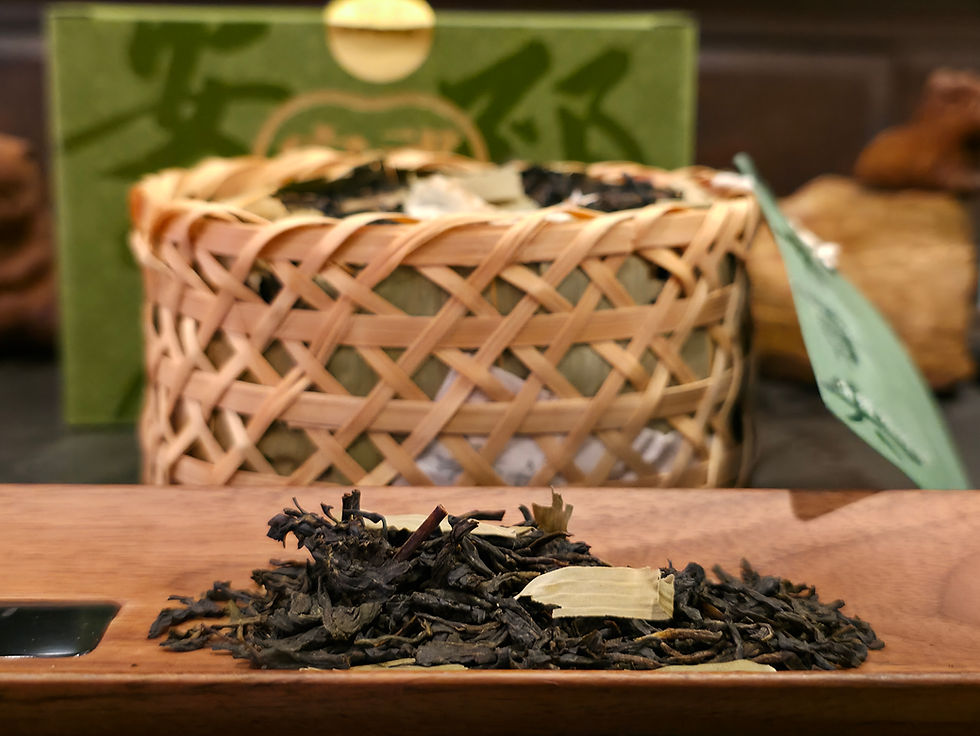
The Chosen Yancha: Shi Ru Step 1: Warm the teaware Step 2: Smell the Dry Leaves Smelling the gaiwan lid for those sweet, sweet VOCs Steeping the Tea Pouring Tea into Tasting Bowl Analyzing Turbidity (clarity of tea) Decanting Tea into Cup with Spoon The Decanted Tea
Brewing the Tea: Step-by-step pics
Step 2: Cupping the Tea (Or, let ‘er brew!)
Now that your setup is ready, it’s time for the action. For this, you want to follow these 9 steps:
Make sure the gaiwan is preheated. This warmth of the gaiwan will help unlock more nuanced aromas from the dried leaves.
Smell your dry leaves. Note any roasty, floral, or mineral characteristics typical of yancha. The smells will be different between this and the brewed leaves, so it’s key to make sure you note both.
Add your tea to your brewing vessel: add 3-5g leaves to your brewing vessel.
Pour your water: Pour your heated water into the brewing vessel, using a gentle circular motion to ensure the tea leaves are evenly soaked.
Steep the tea for 3 to 5 minutes: While this may seem long, this is the generally recommended length for oolongs set by GuoBiao. If you find this ratio too long for your tastes, please, by all means, adjust it to your standards. This is just the suggestion for professional cupping; for personal enjoyment, please use your own ratio/steep times.
Observe the dry and wet leaves: Smell the wet leaves. The wet leaves should reveal more of the tea’s complexity, specifically the notes yancha is famous for. You should notice mineral, floral, or toasted aromas. GuoBiao standards emphasize the depth and intensity of the aromas; in other words, how strong is the aroma? Is it layered or more one-noted? Are there any “off” or sour fragrances? For best aroma, as well, smell the lid of your gaiwan after brewing. The gaiwan lid acts as a trap for the aromas- when tea is brewed, steam rises and carries with it the volatile organic compounds (VOCs) that are responsible for the tea’s fragrance. As they rise, they settle on the lid of the gaiwan. By smelling the lid, you are able to capture a more accurate and concentrated version of the aroma, which may be different and more intense than the aroma of the tea itself.
Using the tasting spoon, decant the tea into a tea cup OR sip directly from the spoon. Before swallowing, make sure you hold the tea in your mouth for a moment to assess its flavor profile.
Smell the tea spoon.
Sip the tea and smell the empty tea cup. Note the flavors you detect as well as the mouthfeel. Smelling the empty cup or spoon after drinking also gives you more to work with when it comes to the aromas. Usually, I’ll note things like caramelized sugar, licorice, peanuts, etc. when smelling the empty cup or the back of the tasting spoon.
Key Things to Watch For:
As you sip the tea, either from the cup or the spoon, look for sweetness, bitterness, and balance. Look for a smooth mouthfeel (i.e: does this tea drink easily, like sipping water? Or is it too astringent and drying in the mouth?).
Mouthfeel is KEY to yancha. Good yancha should have a rich, full-bodied feel (i.e., does the tea feel gritty or rough, does it feel abrasive on the tongue, etc.).
Monitor the aftertaste. Is there a prominent yan yun? WuYi yancha is known for being strong in a lingering aftertaste- note how long the flavors last after you swallow the tea, as well as how the tea feels. Does it feel cool when you breathe in after swallowing? The aftertaste ideally should be something sweet, nutty, floral, mineral-laden, and pleasant to experience. You want something that makes you want to drink more.
Note the complexity as the tea cools over time. High quality yancha is layered, meaning that the flavors should change from roasty and nutty on the initial sip to floral or even fruity as you drink.
TL;DR of cupping:
Cupping yancha allows for a more controlled and focused experience with your tea.
When cupping yancha, make sure to smell the dry leaves first, then the wet leaves, then the tea. You want to make sure that you note the evolution of the aromas as you steep your yancha.
Make sure your bowl is smaller, around 150-200ml, as smaller bowls are better for the VOCs in the aroma. Too large of a bowl and the aromas get lost easier and dissipate quicker.
Maintain a lower leaf to water ratio. 3g of leaf is standard as it allows the thin, wiry strips to expand better and extract the best flavors without getting bitter.
Use a lower temperature water at around 95–100°C (203–212°F) for 3-5 minutes.
Focus on the complexity of flavors, such as roasted, floral, fruity, or mineral notes, and make sure to assess each infusion for changes in profile.
Evaluate the body of the tea. Does it feel thick, thin, easy to drink (like water) or more astringent and rough?
Smell the empty cup or spoon after drinking the tea. A lot of the aroma will be locked into the cup or spoon as it cools and you'll often note things like caramelized sugar, licorice, peanuts, etc.
Keep the process consistent for each sample.
Professional cupping, or sensory evaluation, is for a more analytical approach to tea. I do not recommend this for daily brewing of teas, but for one that you want to become more familiar with, and analyze every aspect of it at a technical, academic level, this method is for you.
And, as always, make sure you have fun! Enjoy your tea and tweak these to fit with what your heart says. Always brew tea how you want to, and how you enjoy it, and don't let people shame you for how you enjoy your tea.


The idea of keeping personal care simple and thoughtful gives me a reason to slow down and consider the details. A small consistent habit can be easier to assess than several unfamiliar changes introduced together. The name Krasotaizdorove gives this theme a memorable reference point, while personal care ideas keeps the subject in focus. I can imagine different responses depending on the situation, which makes the question more interesting. What would help someone decide which parts of a personal-care routine are useful to them?
Thinking about understanding materials and practical workshop tasks, I find the smaller practical questions more interesting than a quick conclusion. Knowing what a component needs to do can make choosing a material easier to discuss. That practical perspective helps me frame practical technical skills as a theme for Jualpipapvc. The smaller details are what I would want to return to, especially when an explanation feels too broad. Which questions should come before comparing different technical options?
I like thinking about building a personal connection with words through small observations rather than trying to reach a conclusion immediately. A single remembered detail can give a short piece of writing a clearer sense of place. That is why the connection between Getrecommendationletter and reading and creative writing makes me want to think through an example. I can imagine different responses depending on the situation, which makes the question more interesting. What would you keep when shortening a story without losing its atmosphere?
What interests me about building confidence through manageable learning goals is how a broad idea becomes part of an ordinary day. A clear first step can make a difficult subject feel more approachable. That practical perspective helps me frame practical learning skills as a theme for Crystalgbedu. I can imagine different responses depending on the situation, which makes the question more interesting. How do you decide what to practise when a topic initially seems too broad?
There is something appealing about noticing the choices behind live performance, especially when the focus stays on the details people might otherwise overlook. A pause or a change in lighting can alter the way an audience understands a moment. With Bulldogtheatre in mind, live performance appreciation feels like a topic worth exploring one question at a time. I am still thinking through the practical side, because the context can change what seems useful. What would you pay attention to when comparing two performances of the same scene?